
Applications Open: 08/14/2025
Application Deadline: 11/21/2025
Overview
The American Occupational Therapy Foundation (AOTF) awards Intervention Research Grants (IRG) as part of its mission to advance the science of occupational therapy to support people’s full participation in meaningful life activities. The purpose of this grant program is to lay the necessary groundwork for larger intervention studies and support the profession’s Vision 2025 of occupational therapy as an evidence-based profession.
The IRG program aims to provide seed funding for the development of new and innovative ideas, generating preliminary data that serves as proof of concept. Many larger funders, including federal agencies and major nonprofit foundations, require this initial data in order to consider funding applications. However, funding sources for this early-stage work are often limited. The AOTF IRG plays a vital role by investing in the development of ideas and data during the initial phases of the occupational therapy research process.
Program Impact and Success
Since launching in 2013, AOTF has funded over 30 Intervention Research Grants with more than $1.5 million in research support. The program’s impact extends far beyond initial funding:
- 93% of IRG recipients have gone on to receive federal funding for their work
- Over $19 million in follow-up funding has been awarded to IRG recipients
- 32 publications in both occupational therapy and non-occupational therapy journals have resulted from IRG findings
- Grant recipients have delivered 90+ presentations based on their research
Grant Details
IRG now offers up to $100,000 per grant for 1 year.
The Intervention Research Grant program receives significant funding from the American Occupational Therapy Association (AOTA) and the St. Catherine Challenge.
Eligibility Requirements
General Personal Criteria:
- The PI has a terminal research degree (PhD, ScD) or has an OTD or EdD with advanced research training (e.g., completion of a post-degree research fellowship).
- The PI is a credentialed occupational therapist with a full-time faculty position appointment or an equivalent research position at the time of application, OR a non-OT investigator with a primary academic appointment in an occupational therapy department.
- The PI is employed by a U.S. domestic, public or private, non-profit organization/institution that is eligible to receive Foundation research grants and will ensure its accountability and support for the project.
- The PI is a U.S. citizen or non-citizen national of the U.S. admitted for permanent residence, OR applied for permanent residence. (For non-citizens/visa holders, the applicant organization must have policies in place to determine whether residence status or visa status will allow completion of the research.)
The PI should have a funding history with early-stage, emerging, or early midcareer investigators, which may include small research grants and training-related or mentored career awards.*
AOTF will give preferential consideration to applications that utilize common data elements and include them in their grant applications where appropriate. NIH encourages the use of common data elements (CDEs) in clinical research, patient registries, and other human subject research in order to improve data quality and opportunities for comparison and combination of data from multiple studies and with electronic health records.
*An early career researcher is a Principal Investigator (PI) in the early stages of their independent research career, typically within 10 years of completing their terminal research degree (e.g., PhD, DSc) or equivalent training (such as a degree research fellowship for non-research degrees, e.g., OTD/EdD). A longer time frame may be more suitable for individuals who have spent a significant amount of time in non-research roles following their degree. These roles may include clinical practice, teaching-only academic positions, industry work (e.g., regulatory affairs or clinical operations), public health or policy practice, administrative or leadership positions, military or government service, entrepreneurial activities, or caregiving responsibilities. Eligible PIs are generally at the Lecturer, Instructor, Assistant Professor, or early Associate Professor level (or equivalent). Their funding history may include small research grants, mentored career development awards, or training-related mechanisms aligned with early-stage or emerging investigators.
Research Priorities
For all of our research grant programs, we are actively soliciting grant applications that examine racial, social, and health inequities and injustices and promote social justice. Grant applicants are now asked to address how they will involve participants from underrepresented populations. Plans for the inclusion of women and minorities must be included in the application or proposal and scientifically justified. Applications and proposals should describe the composition of the proposed study population in terms of sex/gender and racial/ethnic groups, and provide a rationale for the selection of such subjects. Any exclusions based on sex/gender or race/ethnicity must include an explanation and justification grounded in scientific or ethical rationale. Investigators should also plan appropriate outreach programs and activities to recruit and retain the proposed study population, consistent with the research project’s purposes.
Application Process
The Intervention Research Grant represents a unique opportunity to advance occupational therapy science and your research career. With proven success in helping investigators secure larger federal funding, the IRG program serves as a critical stepping stone for early-career researchers ready to make their mark in occupational therapy research.
Submit your Letter of Intent beginning August 2026.
Questions: Contact the AOTF at research@aotf.org. Please note that it may take a few days for a reply.
Application Timeline
|
Date |
Application Stage |
|---|---|
|
Summer 2025 |
RFA and award guidelines are posted on the AOTF website. Review the research priorities, objectives, approaches, and eligibility criteria found in the RFA. Review award guidelines. Develop the initial framework for a Letter of Intent and applications. |
|
August 14, 2025 |
Online Submission for Letter of Intent opens |
|
September 19, 2025 |
Letter of Intent deadline 11:59 p.m. ET. |
|
October 6-10, 2025 |
Invitations to submit an Application are extended to principal investigators who meet eligibility criteria and whose LOI is accepted by AOTF. Invitees can begin the application. |
|
November 21, 2025 |
The application deadline for grants is 11:59 p.m. ET. |
|
March 2026 |
Summary statements and award notifications are sent to applicants. |
General Grant Policies and References
Grant Policy on AI
For Applicants: While AOTF does not prohibit the use of AI tools to assist in the writing of proposals (e.g., spell-check and language suggestions), applicants remain fully responsible for ensuring their proposals are factually accurate, clearly written, and appropriately cited. Any AI-generated text must be clearly acknowledged in the application using footnotes.
For Reviewers: Reviewers are prohibited from uploading AOTF applications into any AI systems due to concerns with confidential and proprietary information. To ensure integrity and confidentiality are upheld, grant reviewers will be required to submit a confidentiality agreement form before starting the review process.
Recent Recipients

Wen-Pin Chang, PhD, OTR/L
University of Texas Rio Grande Valley
Empowering Autistic College Students: Mental Health Skill Building at a Hispanic-Serving Institution
Mentor: Shu-Ping Chen, PhD., OT Reg (University of Alberta)

Jessica Kersey, PhD, OTR/L
Washington University School of Medicine in St. Louis
Feasibility of ENGAGE-TBI: a Novel Intervention to improve participation After Brain Injury
Mentor: Joy Hammel, PhD, OTR/L (University of Illinois)

Melanie Tkach, PhD, MSOT, OTR/L
University of Missouri – Columbia
Preparing for Adult Roles: Feasibility of a Transition Intervention for Adolescents and Young Adults with Cerebral Palsy and their Caregivers
Mentor: Winnie Dunn, PhD, OTR/L, FAOTA
Mentor: Kathleen Lyons, OT, ScD, OTR/L
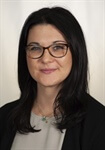
Catherine Hoyt, PhD, OTD, OTR/L, FAOTA
Washington University School of Medicine in St. Louis
Community Driven Methods for Screening for Developmental Delay Among Infants and Toddlers with Sickle Cell Disease
Mentor: Allison King, MD, PhD, MPH
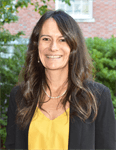
Vanessa Jewell, PhD, OTR/L, FAOTA
The University of North Carolina at Chapel Hill
Feasibility of the REAL-Fam to Support Diabetes Self-Management, Family Participation, and Child Health
Mentor: Beth Pyatak, PhD, OTR/L, CDCES, LRC, FAOTA

Jaewon Kang, PhD, MSOT
Colorado State University
Using Virtual Reality Technology to Increase Acceptance of Home Modifications for People with Multiple Sclerosis: A Pilot Study
Mentor: Brett Fling, PhD

Emily Grattan, PhD, OTR/L
University of Pittsburgh
Examining Metacognitive Strategy Training for Individuals with Unilateral Spatial Neglect
Mentor: Elizabeth Skidmore, PhD, OTR/L, FAOTA, FACRM

Kelle DeBoth, PhD, OTR/L
Cleveland State University Ohio
Building Resilience and Social-emotional Skills in Under-resourced Preschoolers with History of Trauma
Mentor: Susan Bazyk, PhD, OTR/L, FAOTA

Andrea Fairman, PhD, MOT, OTR/L, CPRP, ATP
Johnson & Wales University
Clinical Efficacy of CO-OP And Mhealth to Support Self-catheterization In Youth with Spina Bifida
Mentor: Douglass Clayton, MD

Mark Hardison, PhD, OTR/L
University of New Mexico
Assessing the Feasibility of the Restorative Occupational Approaches for Disordered Eating (ROADE) Program
Mentor: Catana Brown, PhD, OTR/L, FAOTA
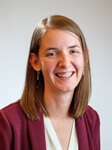
Emily Kringle, PhD, OTR/L
University of Minnesota
duoABLE: Feasibility of a Behavioral Activation-based Intervention to Reduce Sedentary Behavior Among People with Stroke and Their Support Persons
Mentor: Beth Lewis, PhD

Megan Chang, PhD, OTR/L, MS
San Jose State University
Use of a Telehealth Approach to Build Resilience in Parents of Children with Autism through Mindfulness Practice
Mentor: Laurie Drabble, PhD

Erika Kemp, OTD, OTR/L, BCP
The Ohio State University
Determining Efficacy and Active Ingredients of the AquOTic program for children with Autism Spectrum Disorder
Mentor: Amy Darragh, PhD, OTR/L, FAOTA

Kendra Heatwole Shank, PhD, OTR/L, CAPS
Towson University
MCI Intervention for Out-of-Home Participation: Aging, Cognition, & Meaningful Engagement (ACME)
Mentor: Malcolm Cutchin, PhD

Alix Sleight, PhD, OTD, MPH, OTR/L
Cedars-Sinai
The RISE (Re-Invent, Integrate, Strengthen, Expand) Occupation-Based Self-Management Program for Cancer Survivors: A Feasibility Study
Mentor: Pamela Roberts PhD, OTR/L, SCFES, FAOTA, CPHQ, FNAP, FACRM

Victoria Wilburn, DHSc, OTR, FAOTA
Indiana University Indianapolis
Utilizing Ecological Momentary Assessment with Adolescents Attending a Recovery High School
Mentor: Brandon Sorge, PhD

Amy Armstrong-Heimsoth, OTD, OTR/L
Ohio State University
Strategies to Promote the Implementation of Outcome Measures in Stroke Rehabilitation
Mentor: Amy Darragh, PhD, OTR/L, FAOTA

Jewel Elias Crasta, PhD, OTR/L
Ohio State University
Characterizing Occupational Therapy Intervention for Children with Autism Spectrum Disorders
Mentor: Amy Darragh, PhD, OTR/L, FAOTA

Areum Han, OTR/L, PhD
University of Alabama at Birmingham
A Guided Eight-Week Online Acceptance and Commitment Therapy (ACT) Intervention for Distressed Family Caregivers of People with Dementia: A Mixed-Methods Pilot Study
Mentor: Hon Yuen, PhD, OTR/L

Grace Kim, PhD, OTR/L
Grace Kim, PhD, OTR/L
Promoting Adherence in Upper Extremity Home-Based Rehabilitation Through Motivational Interviewing and Ecological Momentary Assessment: A Feasibility Study
Mentor: Yael Goverover, PhD, OTR/L
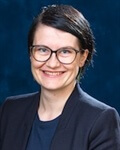
Marion Russell, OTD, OTR/L
Creighton University
Impact of COVID-19 on Family Quality of Life and Healthcare Access for Families with a Child with Diabetes
Mentor: Vanessa Jewel, PhD, OTR/L

Namrata Grampurohit, PhD, OTR/L
Thomas Jefferson University
Post-Discharge Support for Caregivers of Adults with Stroke Through Telehealth Coaching-in-Context
Mentor: Mary Jane Mulcahey

Danbi Lee, PhD, OTD, OTR/L
University of Washington
Return to Life After Stroke: Motivational Interviewing and Self-Management Support in Early Stroke Rehabilitation
Mentor: Chuck Bombardier

Janet Njelesani, PhD, OTR/L
New York University
An Occupation-Based Intervention to Address Bullying Against Students with Disabilities
Mentor: Kristie Koenig

Emily Somerville, OTD, OTR/L
Washington University- St. Louis
A Tailored Medication Management Intervention for Older Adults
Mentor: Susan Stark

Alex Wong, PhD, DPhil, BSOT
Washington University- St. Louis
Feasibility of Mobile Self-Management Intervention for Mild Stroke
Mentor: Carolyn Baum